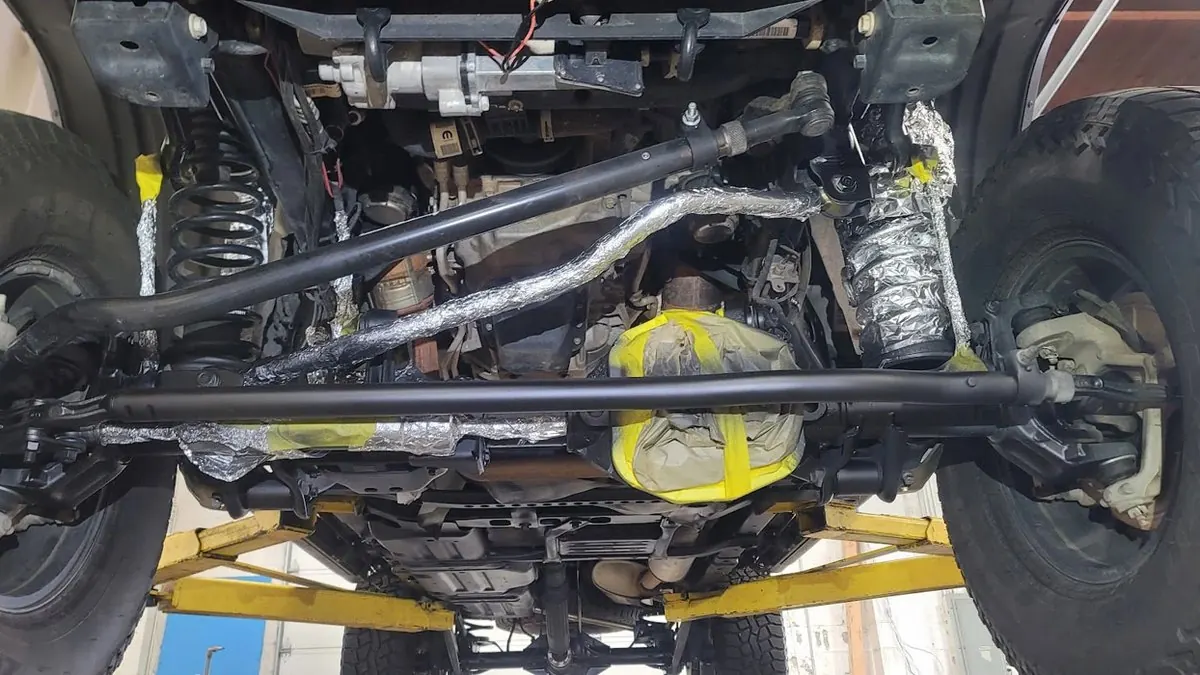
A pothole can damage a car's suspension by bending a tie rod or control arm, knocking the wheels out of alignment, blowing out a shock or strut, or cracking a ball joint or sway bar link. The tire and wheel usually take the first blow, so check those first: a bulge in the sidewall, a dent in the rim edge or a slow leak. If the car now pulls, shakes or clunks, the hit reached the suspension.
AAA's survey found that about 1 in 10 drivers needed a repair after a pothole in 2021, with an average bill close to $600 and $26.5 billion in damage nationwide. Most hits do no harm. The trick is spotting the ones that did.
What takes the force, in order
Energy from the impact travels inward from the road. The parts nearest the pavement fail first.
| Part | What a hard hit does | How you would notice |
|---|---|---|
| Tire | pinches the sidewall against the rim, breaking internal cords | bubble or bulge on the sidewall, slow air loss |
| Wheel | dents or bends the rim lip; can crack alloy wheels | vibration at speed, air leaking at the bead |
| Alignment | shifts toe or camber by bending or moving a part | crooked steering wheel, pull, fast edge wear |
| Tie rod | bends the rod between the rack and the wheel | steering wheel off center, car wanders |
| Control arm or bushing | bends the arm or tears the rubber | clunk over bumps, pull under braking |
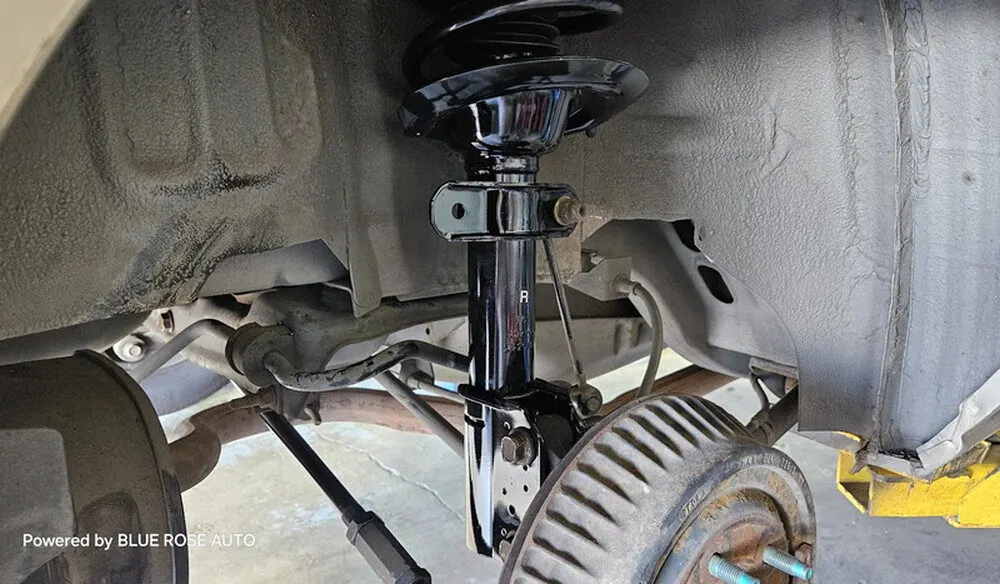
| Shock or strut | bends the rod or blows the seal | oil on the damper, extra bounce, knocking |
| Ball joint or sway bar link | damages the joint | rattle or knock on rough pavement |
A bulging sidewall is the urgent one. That tire can fail without warning, so put the spare on or have the car moved.
The three-drive check
Run these on the drives that follow the hit, not just the first one. Some damage, such as a slow leak or a bushing tear, takes time to show.
Drive one: before you go far. Pull over somewhere safe. Walk around the car and look at the struck tire and wheel with your phone light. Look for a sidewall bulge, a chunk out of the rim, or a tire that already looks low. Then drive slowly in an empty lot with your hands light on the wheel.
Drive two: town speeds. On a quiet, level street, note whether the steering wheel logo still sits level when you go straight. Brake gently and then firmly. Listen over speed bumps for a new clunk or rattle. Check the tire pressure the next morning against the door-jamb figure.
Drive three: highway speed. Hold 55 to 65 mph on a smooth stretch. A new shimmy in the wheel usually means a bent rim or lost wheel weight. A slow, steady pull means alignment. If the car tracks straight, sits level and stays quiet across all three drives, the hit most likely did no lasting harm.
Write down what you find. Notes and photos help with both the repair and any claim.
Driving habits that limit the damage
AAA's advice in the same release is practical: keep tires at the right pressure, watch the road ahead, and treat standing water as if it hides a hole. If a pothole cannot be avoided, slow down as much as you safely can and avoid braking hard at the moment of impact. Braking compresses the front suspension and leaves less travel to absorb the hit.
Low-profile tires on large wheels give the least cushion. Drivers who chose them for looks take more rim damage on broken roads.
Paying for it: insurer, city or yourself
Pothole damage to your own car usually falls under collision coverage, though gradual wear from rough roads does not. The Insurance Information Institute points out that pothole repairs may come in under a $500 or $1,000 deductible, so get a repair estimate before deciding whether to file. If you do go ahead, the step-by-step insurance claim guide walks through what happens after the first call.
Potholes on city streets are the city's to fix, and reporting them helps the next driver. Eugene takes reports through its pothole page. Damage claims against a public body have their own forms and deadlines, so ask the city or county for its claim process promptly if you think the road was at fault, and keep your photos, receipts and the exact location.
When the hit needs a shop
Book an inspection if any of the three drives turned up a pull, a crooked wheel, a shake or a new noise. For pulls and crooked wheels, the wheel alignment guide explains what gets measured. For bounce or a leaking damper, see shocks and struts.
Blue Rose Auto Care & Repair Services, at 3436 Olympic St in Springfield, does mechanical repair alongside collision and auto body work, so a car with both a bent wheel and a dented fender can be looked at in one place. Before you call, the suspension problems article from Blue Rose Auto Care & Repair Services is a useful read on what a pothole strike can leave behind. The rest of this series is on the front-end guide home page.